Alveos Breathe
Box Breathing, Tailored to Your Lungs
The 4-4-4-4 box wasn’t made for you.
Most box breathing routines are generic: the same 4-4-4-4 for an elite athlete and for someone struggling with breathlessness. One slow exhale measures your CO2 tolerance, and the pacer opens at the rhythm that actually fits your body.
Box breathing is a slow, paced breathing technique built from four equal phases: inhale, hold, exhale, hold. Calibrated box breathing adjusts the length of those phases to your own physiology with a short CO2 tolerance test.
How it works
01
Measure
Take a full breath in, then breathe out as slowly and steadily as you can while the timer runs.
02
Calibrate
Your exhale time sets your box side, between 3 and 10 seconds, using the CO2 tolerance protocol.
03
Breathe
Follow the sun around the box: inhale, hold, exhale, hold. Three to five minutes is plenty.
Use it as a reset before a hard conversation, or to wind down in the evening. For nighttime breathing, read our guide to breathing better during sleep, or see the research approach on our science page.
Common questions
What is box breathing?
What are the benefits of box breathing?
What is the CO2 tolerance test?
How long should each side of my box breathing be?
Is box breathing safe?
What the science supports.
The evidence is strongest for slow-paced breathing, structured breathwork, resonance-style personalization, and breathwork as a stress-regulation practice. The CO2 tolerance mapping is a practical personalization heuristic, not a medical formula.
Box breathing has been tested directly.
A randomized trial compared several five-minute daily breath practices, including box breathing, and found structured breathing improved mood and reduced physiological arousal.
CO2 tolerance can personalize the pace.
The same trial used a CO2 tolerance test, timing one slow, controlled exhale, to set each person’s box breathing intervals. Longer controlled exhales map to longer, slower sides.
Slow breathing can shift autonomic state.
Reviews of slow breathing report effects on heart-rate variability, cardiorespiratory coupling, and emotional regulation.
Personalized cadence is usually tested.
HRV biofeedback typically finds an individual’s resonance frequency by testing breathing rates and observing the heart-rate response.
Breathwork has measured stress effects.
A meta-analysis of randomized trials found breathwork associated with lower self-reported stress, anxiety, and depression, while noting variation in practices and study quality.
Diaphragmatic breathing has trial evidence.
In healthy adults, eight weeks of monitored diaphragmatic breathing improved sustained attention and negative affect, with lower cortisol after training.
Alveos One
Practice lasts minutes. Your breathing is all day.
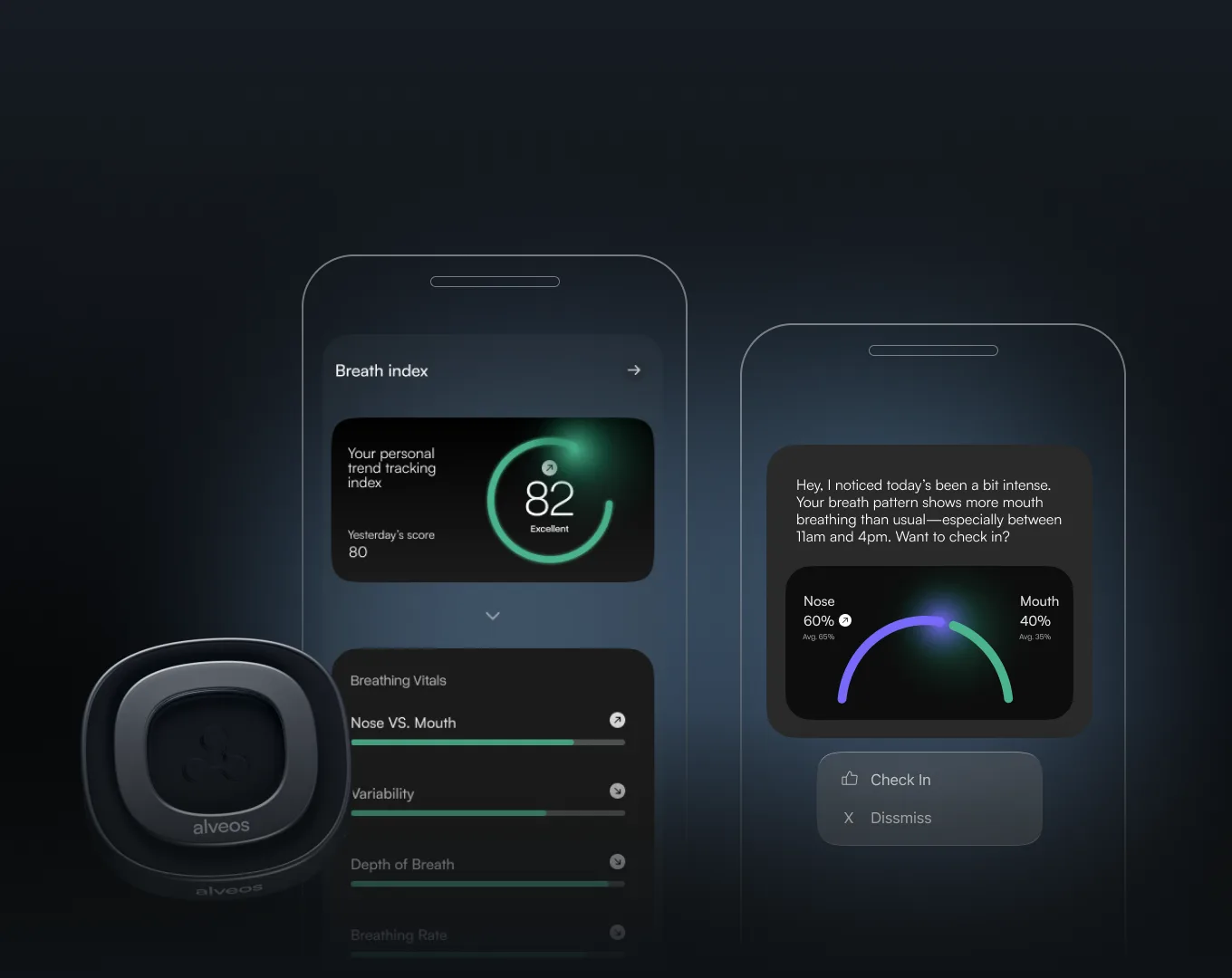
Alveos One tracks every breath around the clock and nudges you gently when your pattern slips.
Respiratory rate variability
94.6% validated accuracy
Haptic nudges
Meet Alveos One